The Rich History of Egyptian Food
Egyptian cuisine is one of the oldest in the world, shaped by the Nile, the desert, and thousands of years of trade, conquest, and cultural exchange. Every dish tells a story — from the fava beans that fed the pyramid builders to the spice blends carried along ancient trade routes.
Food of the Pharaohs
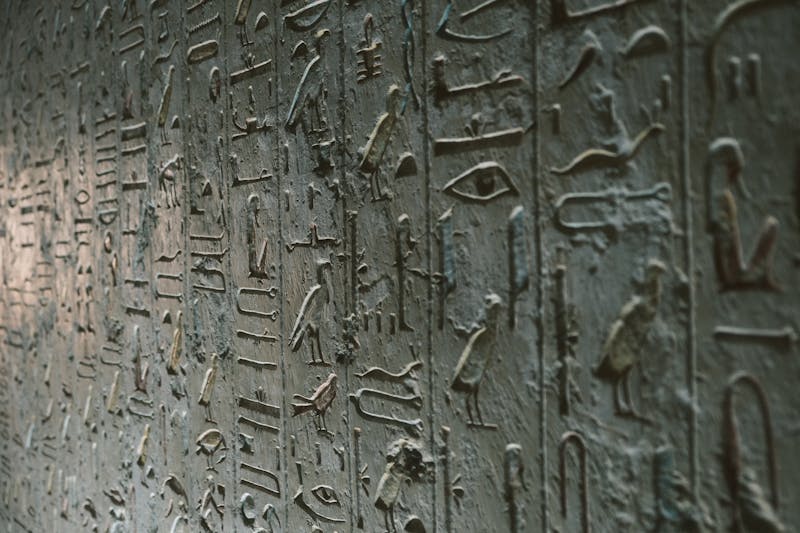
Ancient hieroglyphics in Luxor — Photo by Pexels (Free licence)
Ancient Egyptians were among the first people to cultivate wheat, barley, and flax. Tomb paintings from over 4,000 years ago show bakers making bread, brewers fermenting beer, and banquets featuring roasted duck, figs, dates, and honey cakes. Bread and beer were so central to Egyptian life that they were used as currency — workers building the Great Pyramid at Giza were paid in loaves and jugs of ale.
Fava beans (ful) were a staple then, just as they are now. Lentils, chickpeas, onions, garlic, and leeks formed the backbone of the common diet. The Nile provided fish, and the surrounding fields produced an abundance of vegetables and fruits.
The Crossroads of Flavour
Egypt’s position at the meeting point of Africa, Asia, and Europe made it a melting pot of culinary traditions. The Persians brought rice. The Arabs introduced new spices, sugar, and cooking techniques. The Ottomans left their mark with stuffed vine leaves, kebabs, and elaborate pastries. The Mamluks refined sugar work and created the intricate desserts we still enjoy today.
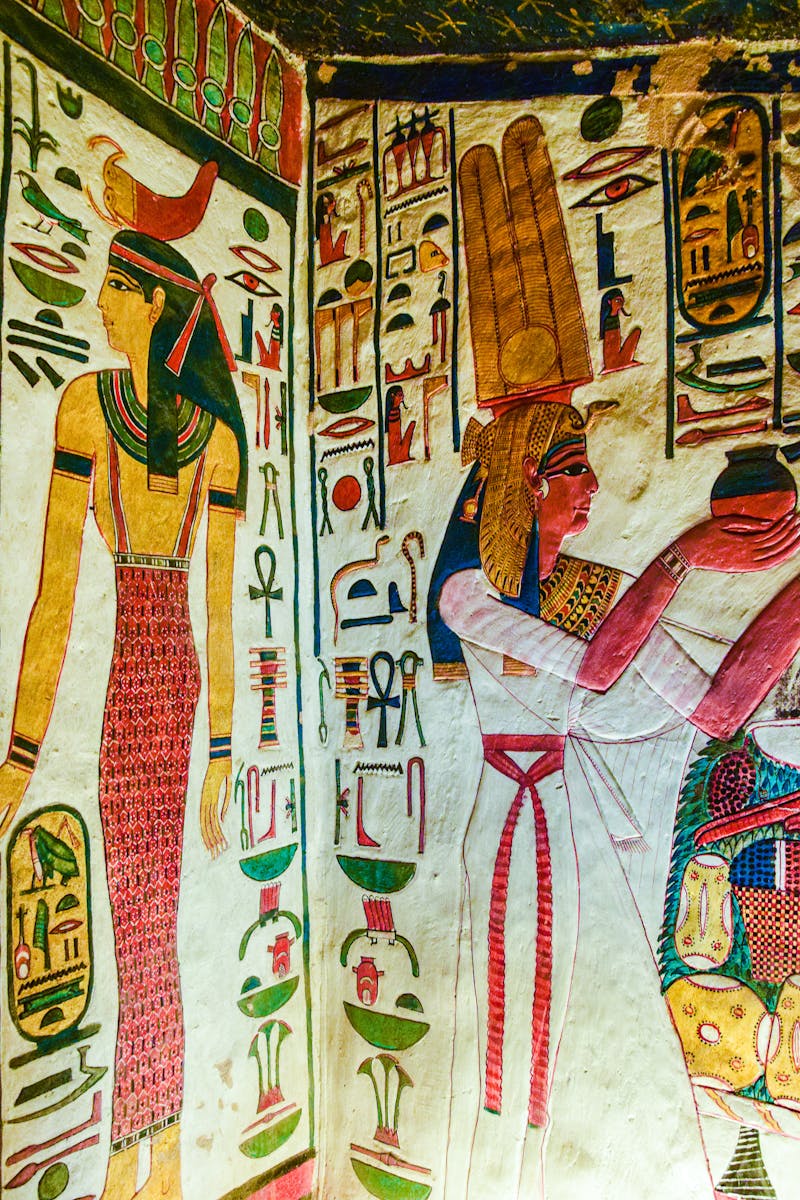
Wall paintings from ancient Egypt — Photo by Pexels (Free licence)
Even British colonial influence can be tasted in Egypt’s fondness for tea with milk — a daily ritual across the country.

Khan El-Khalili Bazaar, Cairo — Photo by Pexels (Free licence)
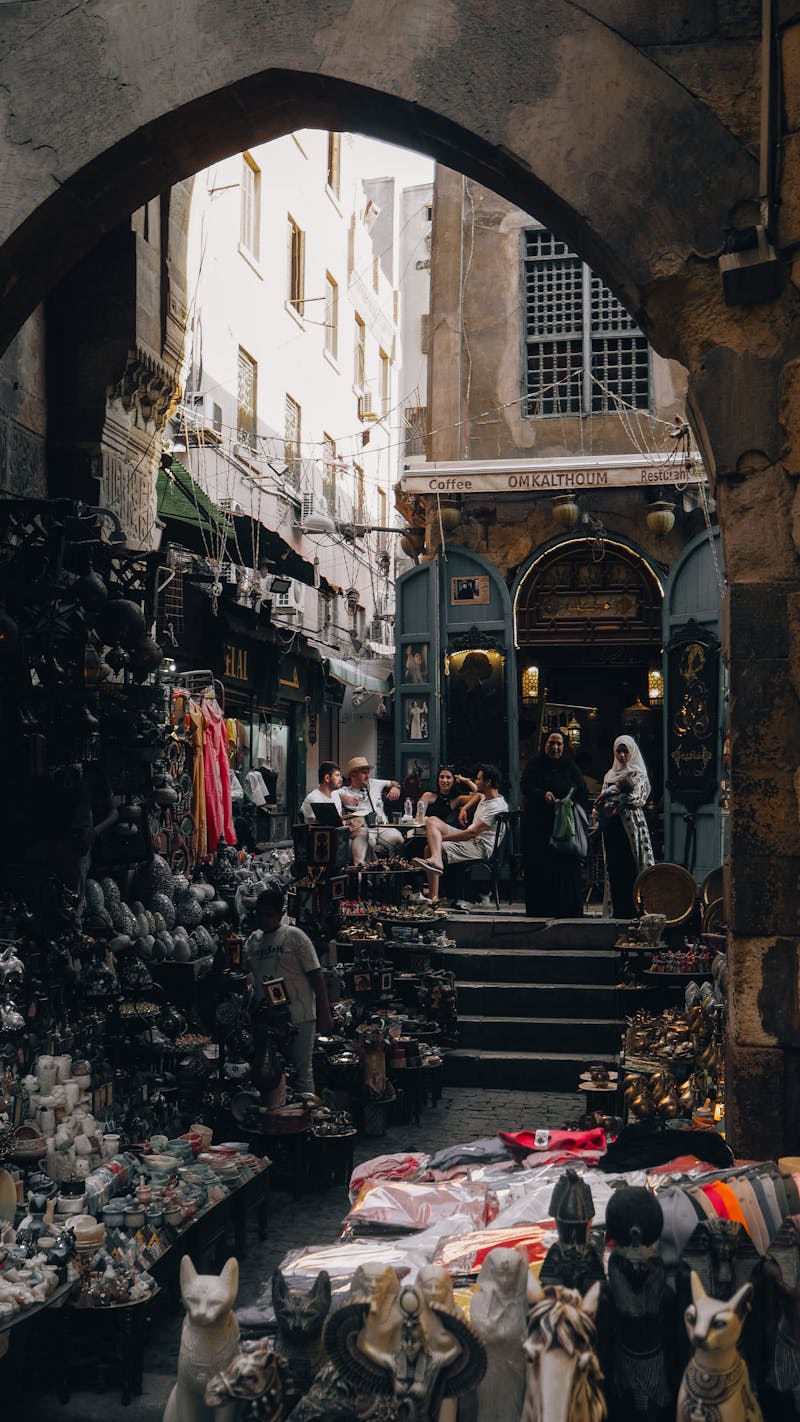
Khan El-Khalili Bazaar, Cairo — Photo by Pexels (Free licence)
Street Food and Social Life
Egyptian food is deeply social. Street food culture thrives in Cairo, where you can find ful medames carts at dawn, koshari stalls at lunch, and sweet potato sellers in the evening. Food is shared generously — it is considered a blessing and an expression of hospitality. The phrase “Itfaddal” (please, help yourself) is heard constantly at Egyptian tables.
Key Ingredients Through the Ages
Ful (Fava Beans): Cultivated since at least 6000 BC. Still the national dish of Egypt today.
Dukkah: A blend of roasted nuts, seeds, and spices unique to Egypt, eaten since ancient times.
Molokhia: Legend says it was once reserved for royalty — the name may derive from “mulukiyya” meaning “of the kings.”
Cumin: Used in Egyptian cooking since the time of the pharaohs and mentioned in ancient medical texts.
Tahini: Sesame was one of the first oil crops, cultivated in the Nile Valley for over 3,000 years.
A vibrant spice market — Photo by Pexels (Free licence)
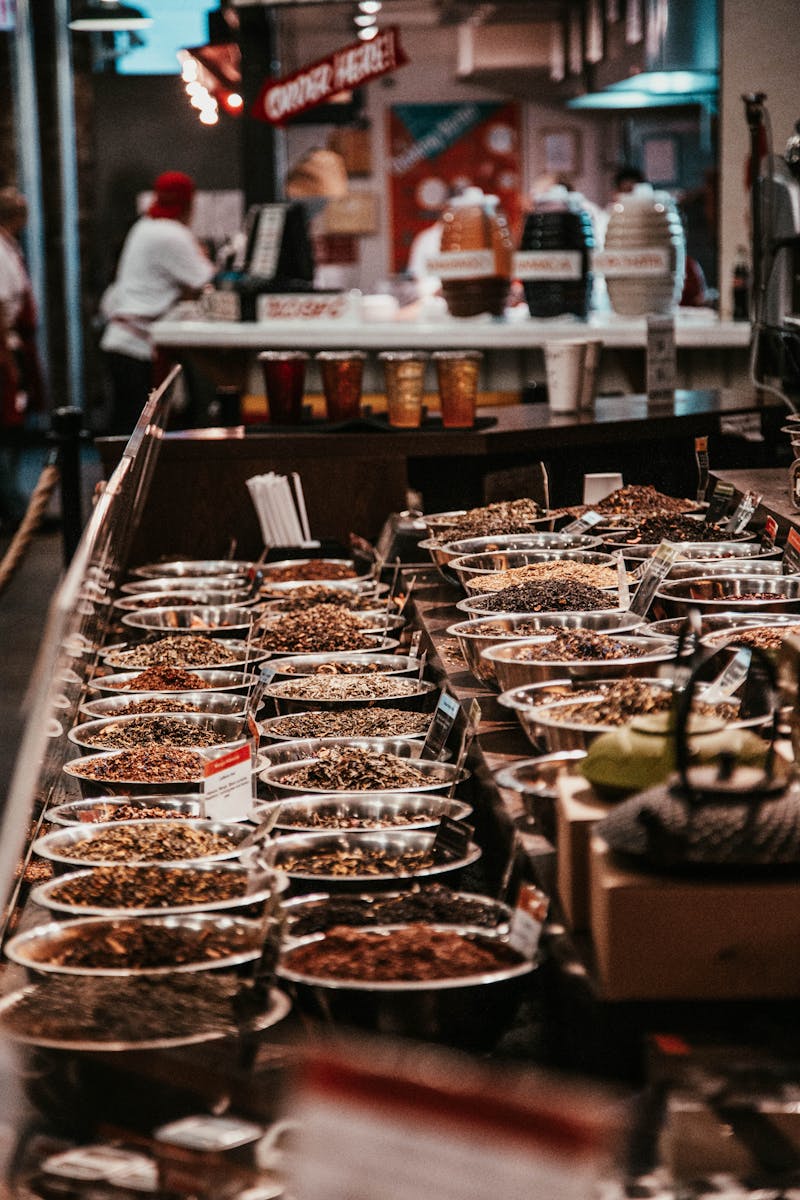
A vibrant spice market — Photo by Pexels (Free licence)
Bringing Egypt to Your Table
At Zambahola, we are proud to bring these ancient flavours to the UK. Every product we stock connects you to a culinary tradition that stretches back millennia. Whether you grew up with these tastes or are discovering them for the first time, we invite you to explore and enjoy.